
Natural vs Artificial Christmas Trees
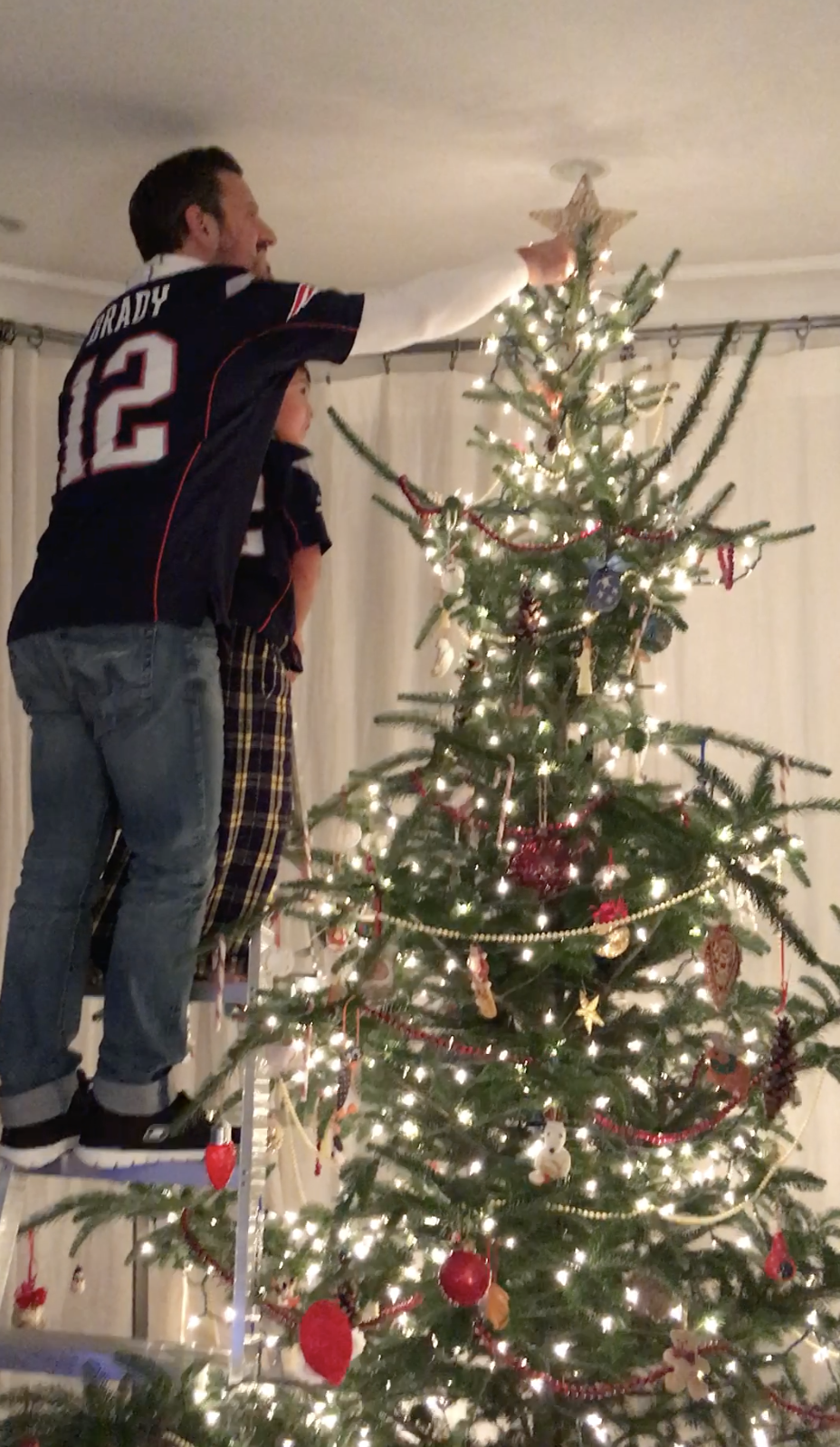
The topic comes up in social discussions at least once during the holiday season, but this year I noted it on four different occasions. The weight of the current environmental crisis has us all asking more questions and trying to make better choices when we can. Some believe that an artificial tree is more ecologically sound because it can be reused year-to-year and they avoid cutting down a real tree, which feels like an environmental crime of the highest degree right now.
I get the train of thinking but I advocate for natural christmas trees and here’s why:
The vast majority of christmas trees are grown on tree farms where they are intentionally planted, in succession, to be harvested just like fruits and vegetables are commercially planted, picked and sold. These trees are slow-growing crops that take 6-10 years to mature, with some varieties taking a bit longer. All that while, their roots are protecting and supporting life in the soil. The trees are also sequestering carbon from the atmosphere and providing habitat for birds and mammals. The farmers are planning for the replacement of the harvested trees with new plantings each season. When one is removed, there is another to take over the role that tree was playing in the tree farm’s ecosystem and their sales sheet.
The United States has around 300,000 acres of christmas tree farmland. 300,000 acres of living trees moving through various stages of cycling carbon from the atmosphere into the soil. 300,000 acres of refuge for robins, bluebirds, sparrows, kestrels, foxes, coyotes, insects, and many, many others. Christmas tree farms essentially act as young forests in comparison to traditional farms that are disrupted year to year with harvest, tillage and replanting. If people stop buying natural trees, those slow-growing farms go out of business. Some hope that such defunct farmland would go into conservation and perhaps some would. Realistically, since about 98% of US christmas tree farmland is privately owned and land seems to be a scarce, sought-after asset these days, those acres are more likely to be sold and developed—housing, commercial buildings with parking lots, factories, data centers, etc.. The carbon cycle is interrupted and the animals are displaced.
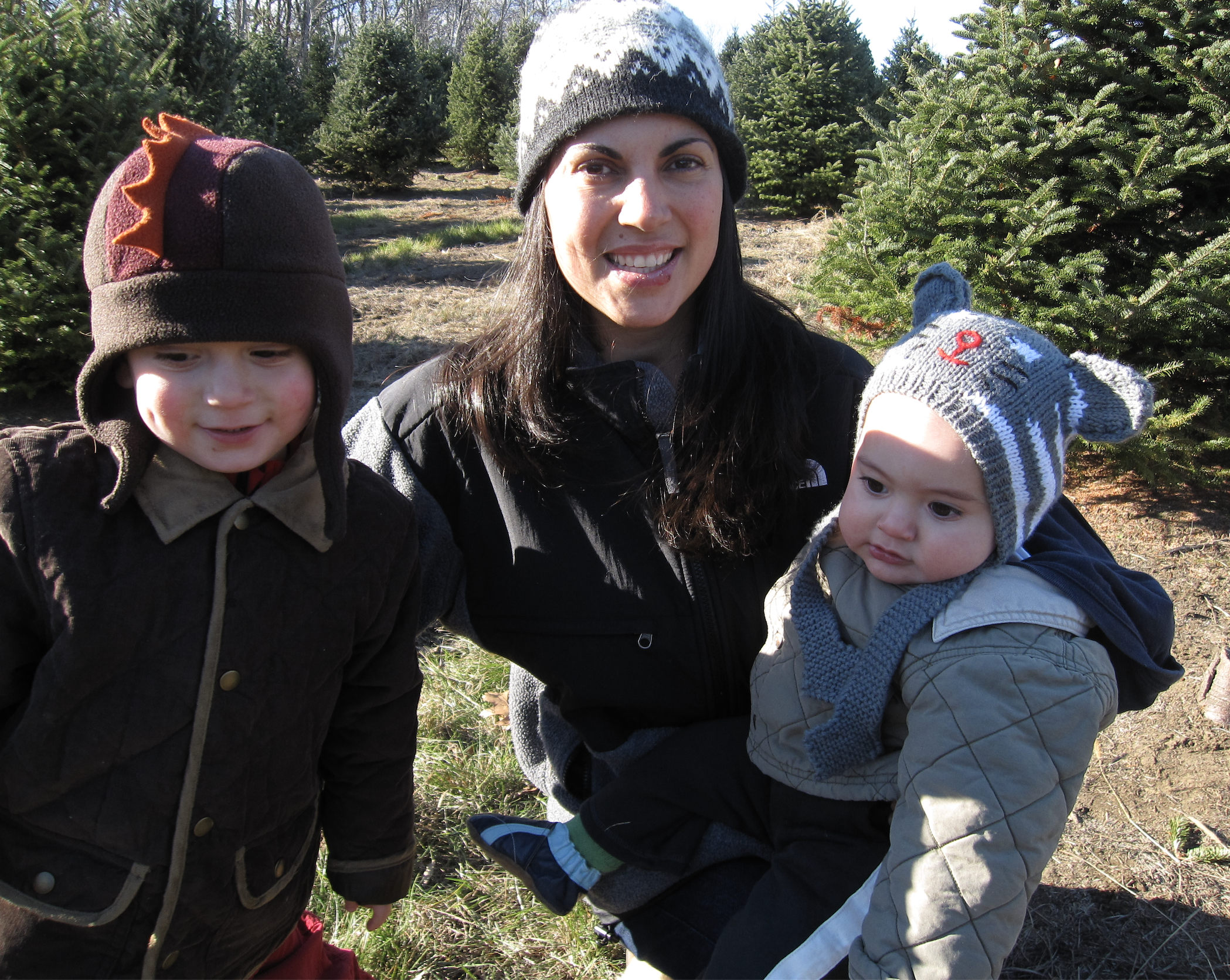
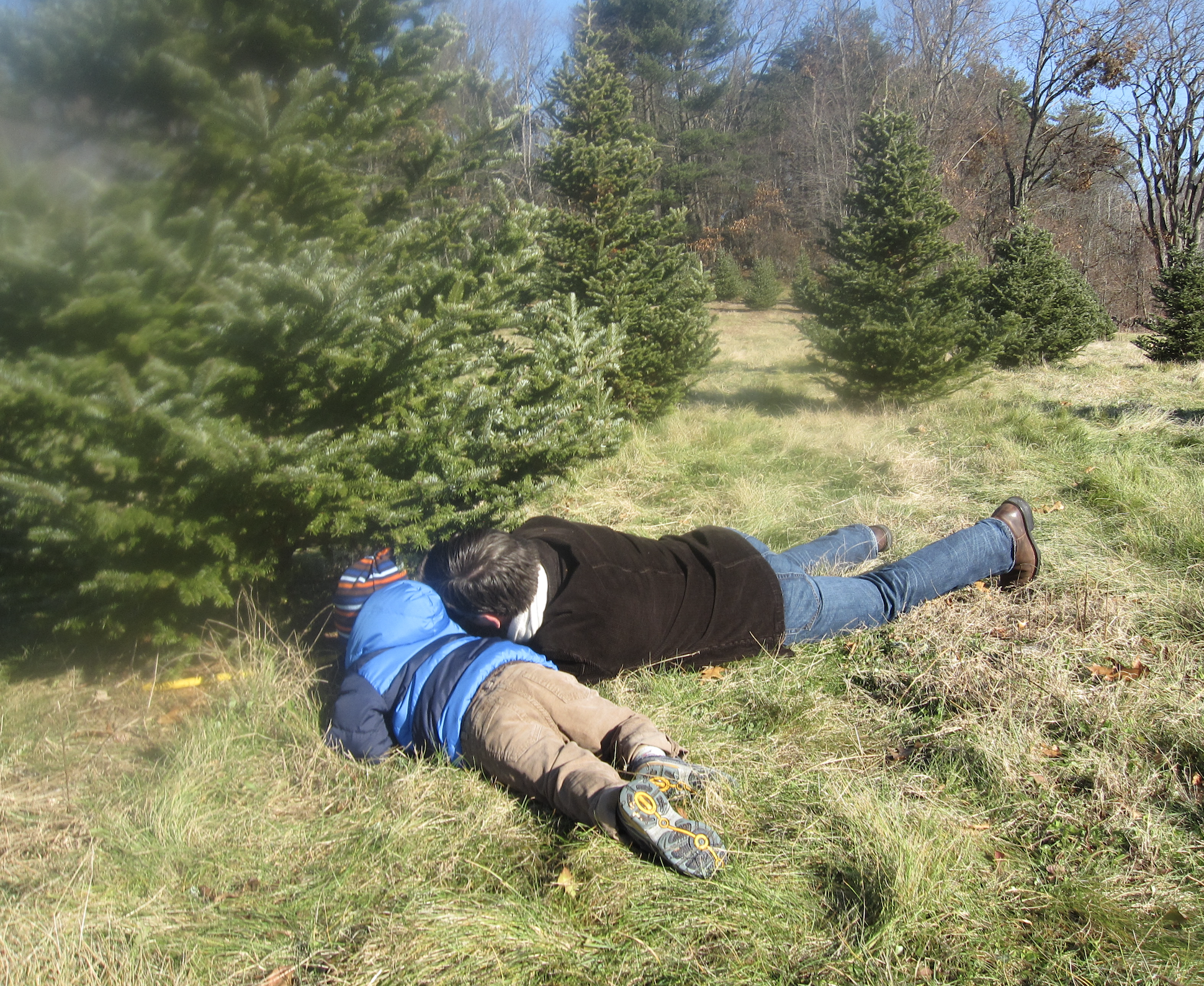
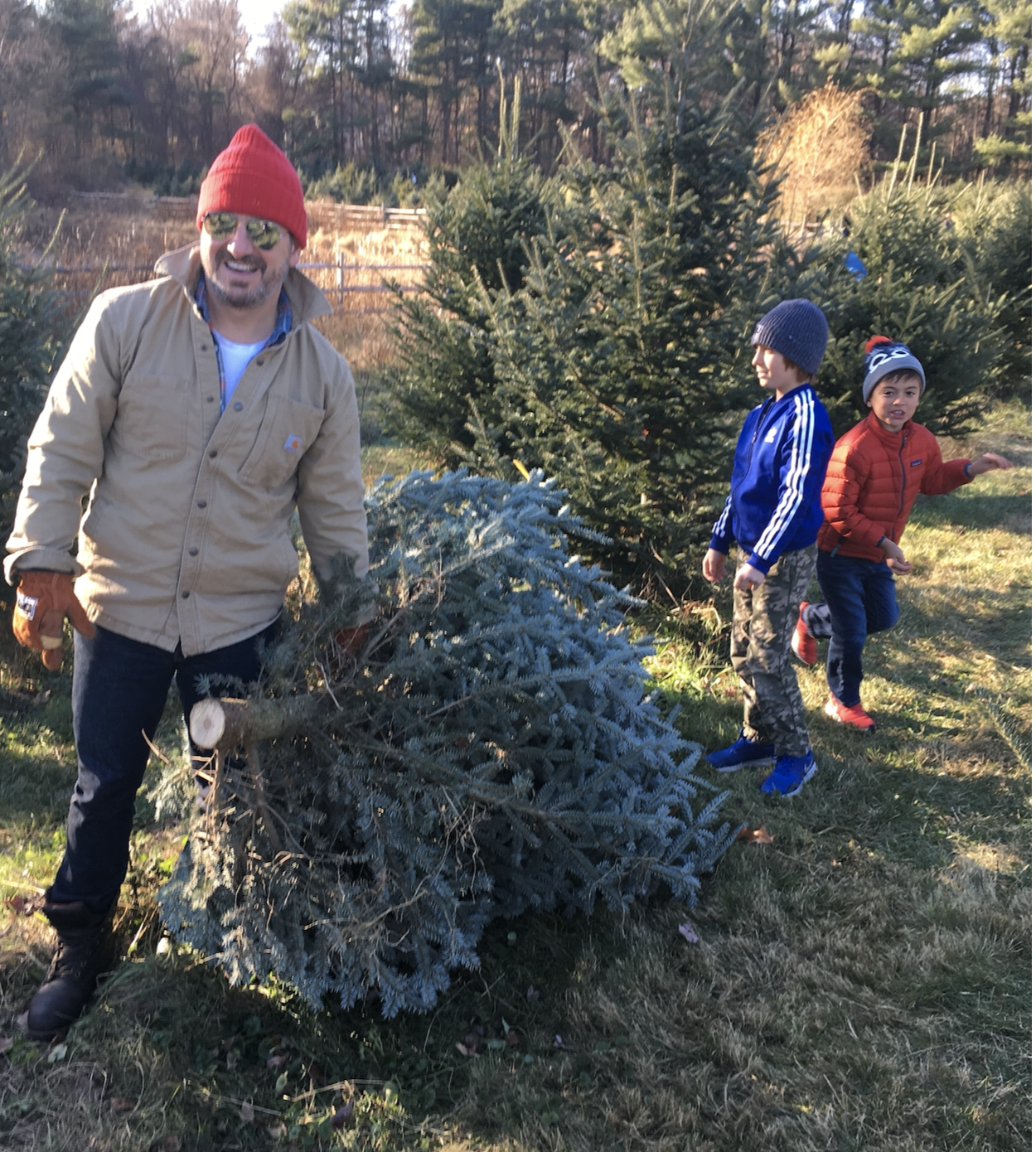
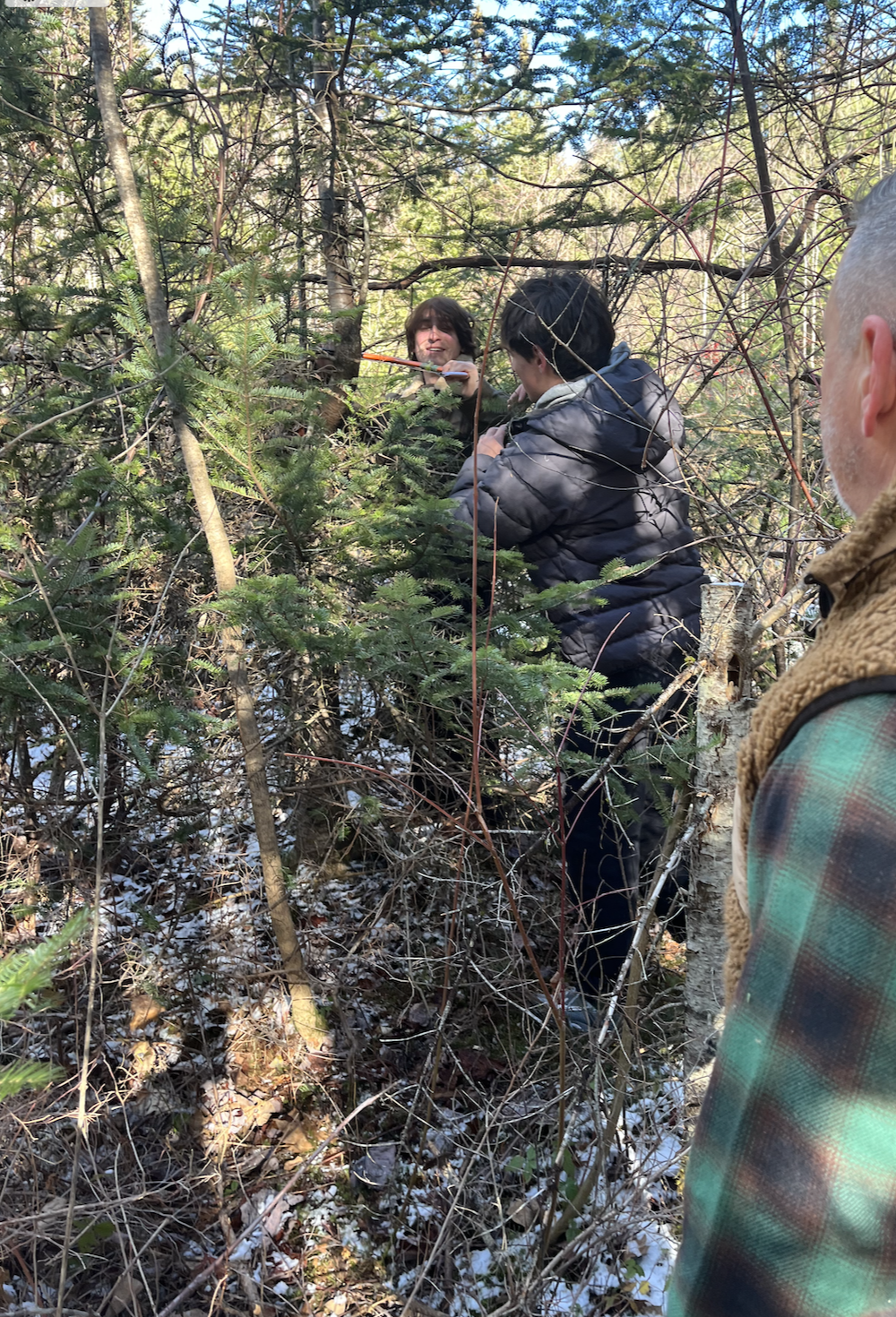
Now, of course, any and all concerns around the potential negative impacts of conventional farming still apply to tree farming. This includes the use of agrochemicals, diesel fuel, and plastics. Supporting sustainable tree farms is just as important as it is for food crops. Hopestill Farm in Sherborn MA is certified organic and Taproot Tree Farm in Stow MA is committed to using integrated pest management strategies and rely on ecological processes to maintain low numbers of pests, while abstaining all together from the use of herbicide. Even fully conventional tree farms, however, are still providing the benefits of habitat and carbon sequestration.
There are some tree farms that operate differently all together and practice managed coppicing for at least some of their trees. This means cutting at a particular height so as to promote regrowth from the stump. Some argue that since conifers do not regrow as easily and evenly as other types of trees when coppiced, that this practice is not effective, but with careful management it can be done successfully. Pieropan Christmas Tree Farm in Ashfield MA has been growing christmas trees in this manner for decades. The practice allows them to grow trees without the use of herbicicdes, pesticidices or chemical fertilizers and avoids soil disturbance. The fallen debris of branches and needles from harvest are left in place to decompose and add nutrients and organic matter back to the forest floor.
OK, but here’s the more complicated part. In many states, you can obtain a permit to cut your own christmas tree from a national forest—not Massachusetts. Based on statistics tracked through Recreation.gov, about 0.23% of US households seek a christmas tree cutting permit each year. The US Forest Service offer guidelines on where and how to cut trees 6 inches or less in diameter, but none of these trees are permitted to be sold. Selectively thinning small numbers of younger trees promotes forest health by decreasing competition for water and nutrients for larger trees, improving air circulation, reducing fire risk, and allowing more light to reach remaining trees and plants.
Problem is there are additional state and federal agencies that also oversee and issue tree cutting permits for various reasons, including but not limited to christmas trees, and they all have slightly different rules and regulations, so information available through Recreation.gov is not complete. This tree cutting permit situation does not seem well regulated or tracked and most definitely contributes to concern and negative sentiments around tree harvesting.
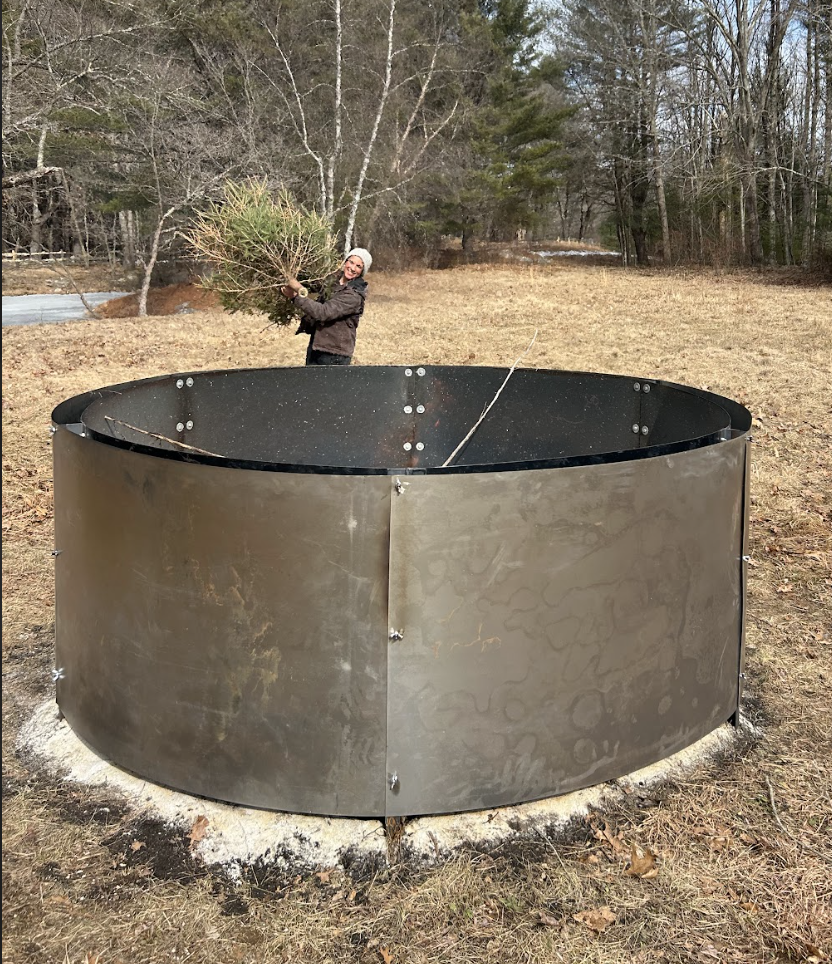
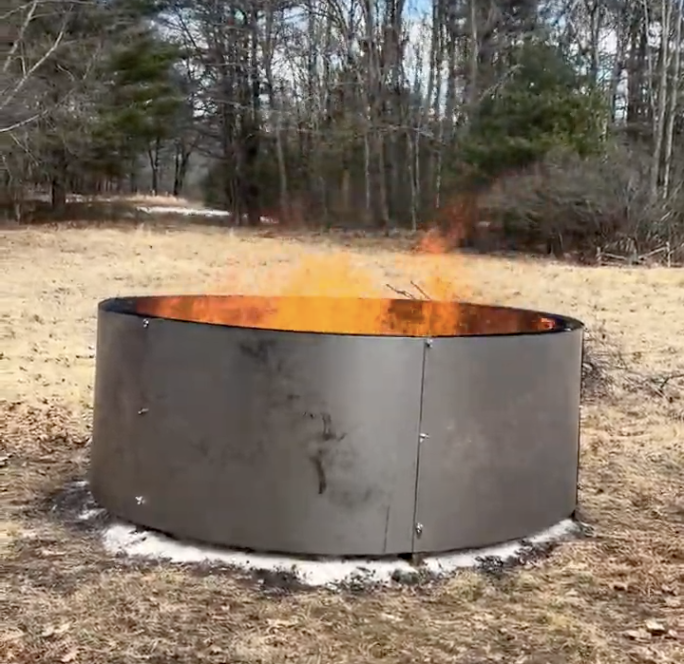
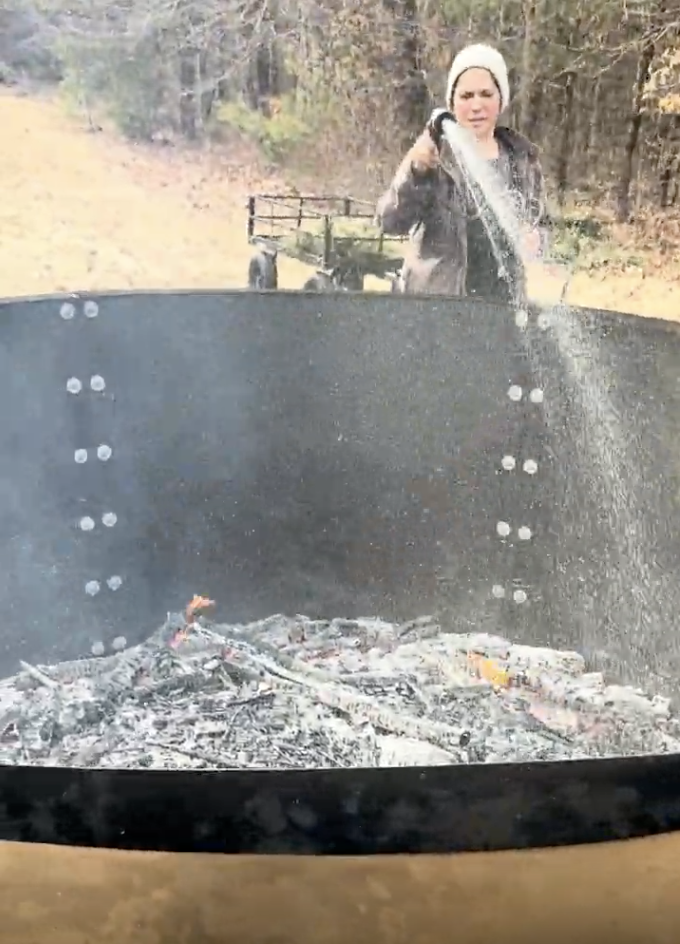
Beyond the discussion of how natural trees are grown and harvested, I think the best ecological benefit is that natural christmas trees can be composted or burned at the end of the holiday season. A conifer tree left whole will fully decompose within 2-5 years, less if they are chipped. If they are burned in a flame-capped manner, there is minimal smoke and the ash or biochar (depending on at what stage the fire is extinguished) can be spread on gardens, fields, or forest floors to promote optimal soil health. When families choose natural trees, it is really important to plan for the trees to be safely recycled into compost, mulch, biochar, ash, or even wildlife habitat or animal fodder, rather than sending them to a landfill.
Artificial trees on the other hand, are often manufactured overseas using one kind of plastic or another and likely contain PFAS, which are toxic forever chemicals found in flame retardants and other heat resistant coatings. While a few companies are making efforts to manufacture artificial trees from slightly better materials, none are 100% free of toxins and none are biodegradable. One article estimated more than 500 years needed for an artificial tree to decompose. Some sources suggest, however, if an artificial tree is used for more than 10 years, it’s eco-footprint is negated. Not sure I believe this is true (nor do the soil microbes and other life forms that are trying hard to adapt and evolve to process the plastics, metals, and chemicals ) but it’s clearly a good idea to keep the artificial trees in use and pass them down, rather than sending them to the landfills.
One last natural tree option I will mention is the idea of purchasing live, potted trees to bring inside the home for the holidays and then plant them outdoors after the season. The size of such a tree is limited to a reasonable container of soil that can lifted and brought inside and people must have appropriate space and climate to transplant the trees into after christmas. We have never done this for our house tree, but this year I purchased a potted arborvitae for the farm stand porch and it looked beautiful covered in lights. A couple days ago I moved her into the hoophouse where I sunk her pot into the ground and mounded woodchips around the base so she can safely wait to be planted in our landscape come spring. This experience really got me wondering why more people don’t just buy an evergreen shrub they’ve been wanting for their gardens and use it as a christmas tree. The shrubs are almost always steeply discounted in November. They can be decorated for christmas then nestled in amongst your herbaceous perennials come spring to give your garden a little winter interest and structure. They don’t have to be traditional firs-variations of holly, cypress, and juniper could all work.
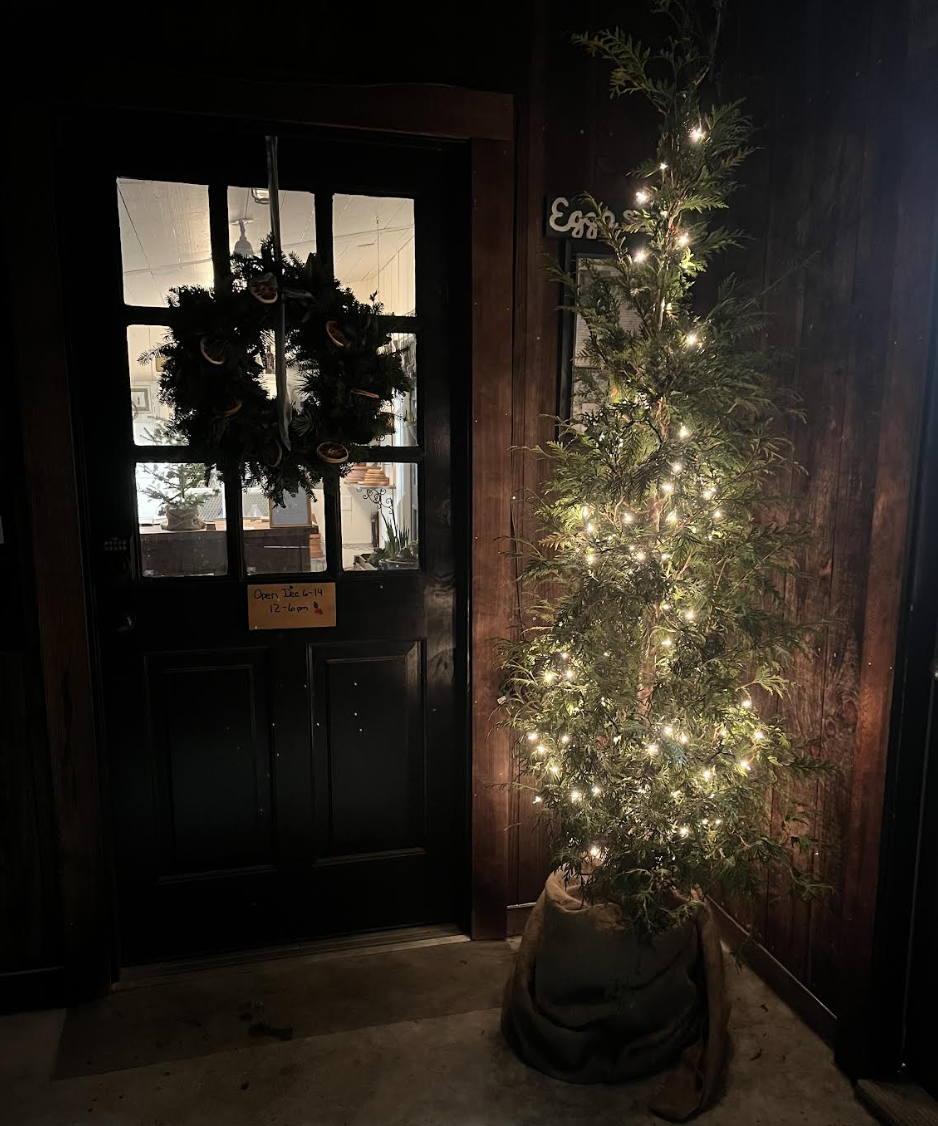
Potted arborvitae dressed up in burlap and LED lights.
Now I want to acknowledge that some people simply can’t bring natural trees of any kind into their homes because of allergies or other respiratory illness that can be aggravated by molds and pollen brought in with a tree that was once living it’s best life in the great outdoors. I have personally struggled in the past with allergy flair ups from our christmas trees. For us, rinsing the tree thoroughly with the garden hose and leaving it to dry off before bringing it inside helped tremendously. Also, trying different tree species grown in different locations may make a difference for one person’s particular allergies.
Environmental concerns aside, natural trees have just always been part of my family’s holiday traditions. The ritual around searching for the perfect tree, and trimming it, and the earthy smell that fills our home once we shove it through the front door signals christmas in my soul. I admit that my strong opinions around sticking with natural trees is just as much about feelings as it is as about facts. Honestly, I don’t hold holiday tree choices against anyone. Heaven knows I do not live a perfectly eco-friendly lifestyle, but I value the thought-provoking questions and conversations on the topic. I did my best to thoroughly research answers to my own questions, but please do your own research before making decisions.
In the end I personally choose to put my dollars toward sustainable christmas tree farming rather than christmas tree factories. As always, I reserve the right to change my mind as I learn more and new products and practices enter the scene. I will be planting a small group of fir trees on our farm this spring, with plans to add a handful every year so we may eventually have homegrown material for our wreath workshops. Let’s see if I can keep them alive.
AND maybe we will try a living potted tree inside the house next year…
Happy New Year!